
Castles in the Sky MaRLo x Triode x HALIENE

Welcome

Maliaj Yang

Product Designer · Builder

Scroll

I design products and build them.
Always aiming to solve real-life problems.
From research to a working app
in the store.

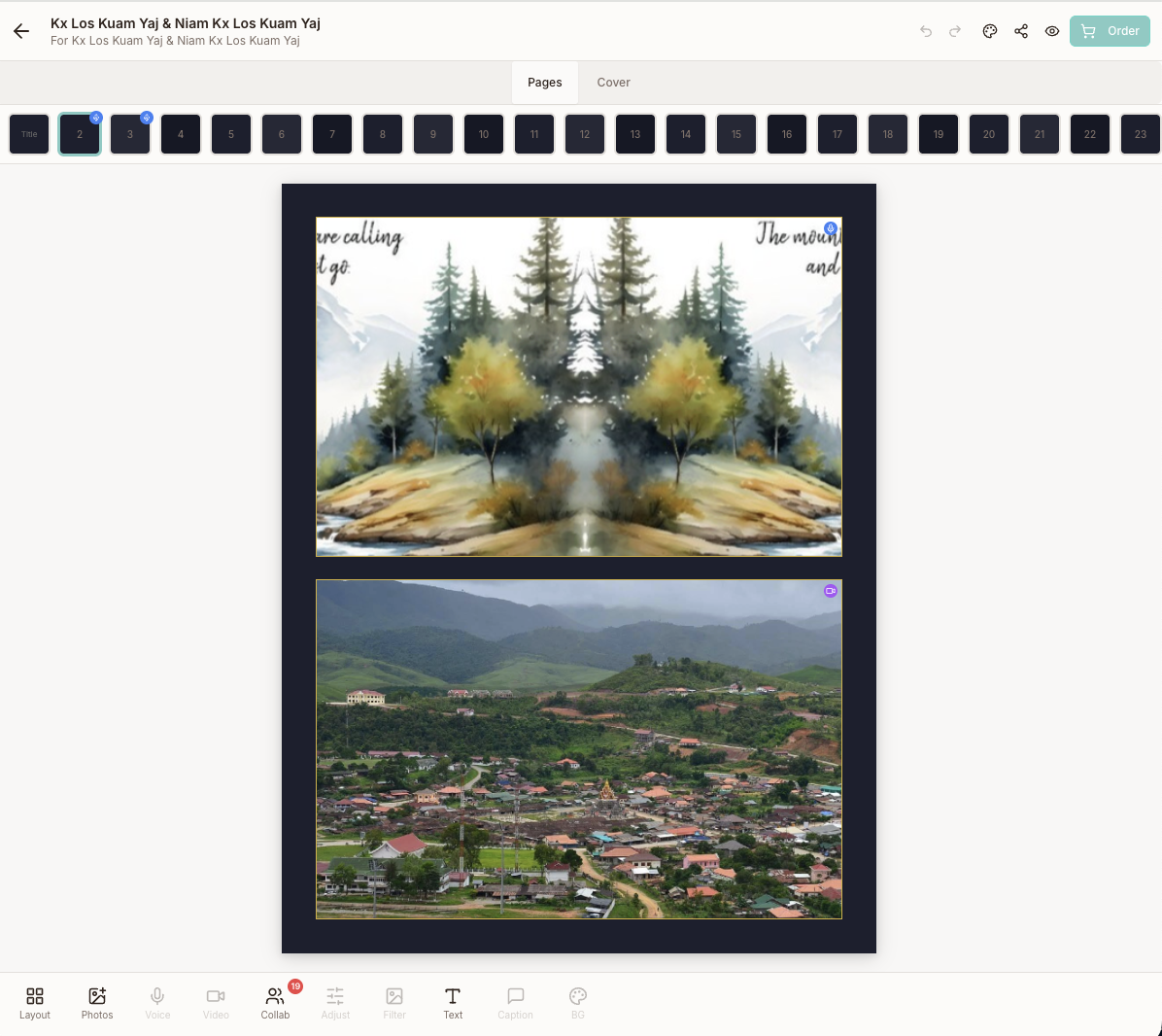
Everyday Love — book editor with a Hmong-titled photo book

iOS · Android · Web

Everyday Love

2025 – Present

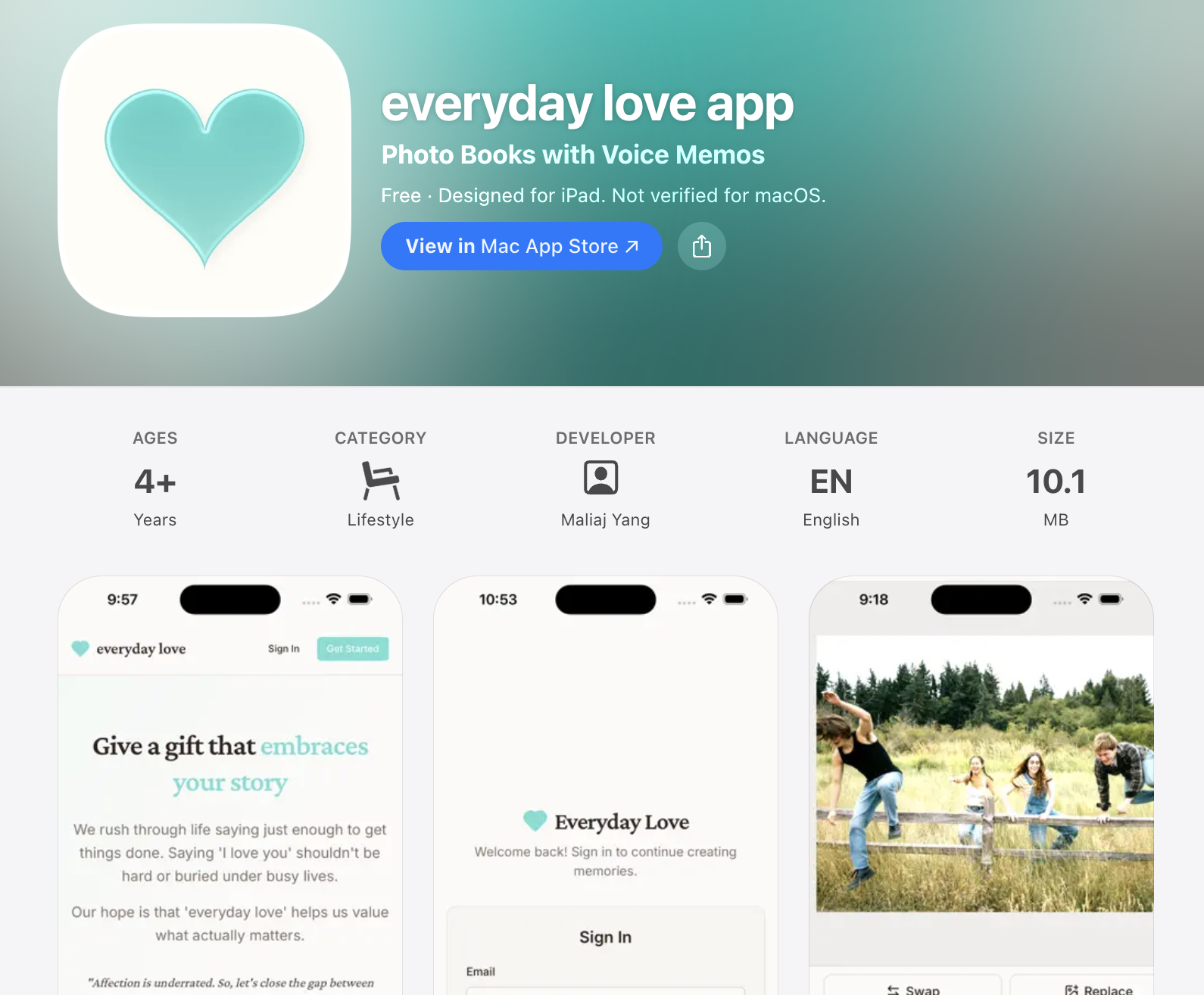
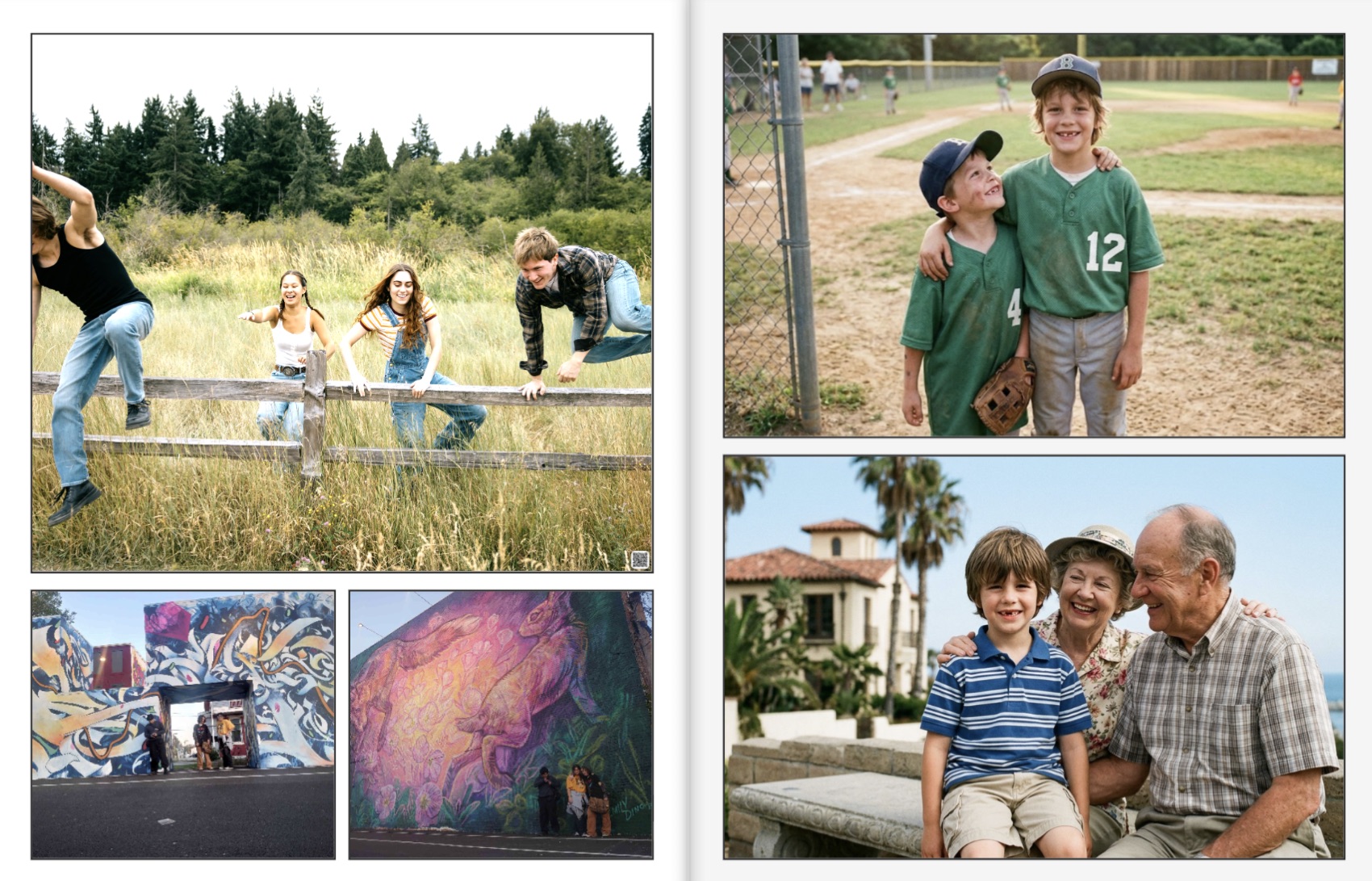
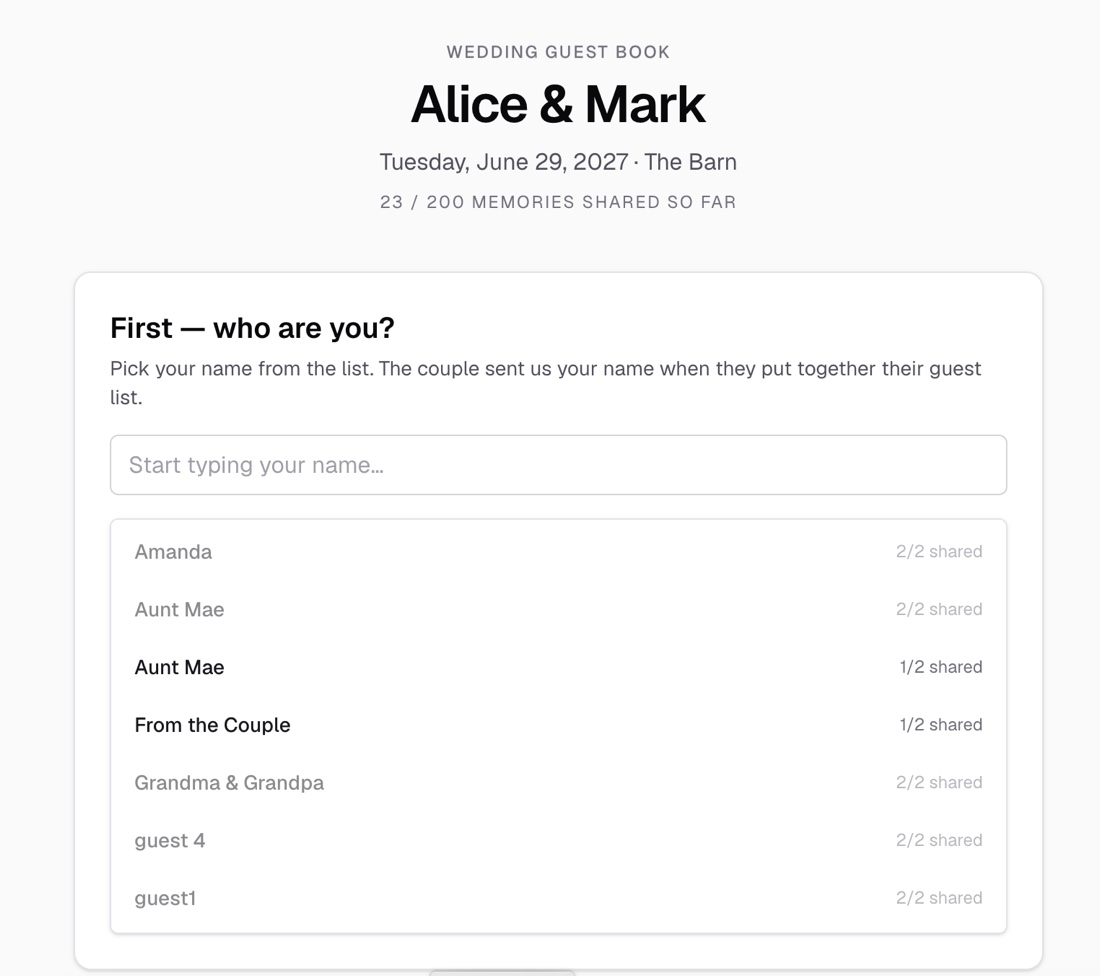
People collect photos, voice memos, and videos from the people they love — then print them as hardcover books. I designed and built from concept to launch.

View project
Koinonia — discover local businesses search interface

Web Platform

Koinonia

2023 – Present

Community platform with live video, messaging, and map-based discovery. Helps people find each other around things they care about.

View project

About

Not the typical path into design.

I worked in compliance and later as a pastor before moving into product design.

What drew me to building was seeing the root of a problem and having a passion to solve it, ideally through technology.

I learned the fundamentals through UX design courses and a coding bootcamp, then kept building through hands-on work—moving from Figma into front-end development and eventually building products end to end as a solo founder, using AI tools to move faster.

Although I've learned a lot building solo, I appreciate working with strong teams and learning from them. I'm drawn to products, apps, platforms, and systems that solve real problems in a meaningful way. I want to keep designing and building with a focus on innovation and creativity.

Location

Etters, PA

Languages

English, Spanish, Hmong

Tools

Figma, React, Firebase

Get In Touch

Let's build
something together.

Back to work

Everyday Love

iOS · Android · Web — 2025–Present

everydaylove.store
FigmaUser Research PrototypingReact CapacitorFirebase StripeLulu Print API
Everyday Love — live in the App Store

The Problem

We used to have shoeboxes of unorganized photos. Now we have the same photos — scattered across phones, SD cards, old laptops, and the cloud.

Although the format has changed; the disorganization seems to have remained the same.

Underneath, there's a bigger problem: we collect more of life than we pause to absorb. Saying 'I love you' shouldn't be hard or buried under busy lives.

The purpose of 'everyday love' is to solve both of these issues in one app.

What I Learned from Research

The research revealed that people were really moved emotionally and connected with the idea of being able to have a tangible way to remember their moments and reminisce about them.

Research "That's really neat!"
Research "Okay, we're going to get the photos out of the cloud."

What I Designed and Why

1. I designed the app mobile-first, since most existing products in this space are built for desktop—even though the photos people want to use already live on their phones.

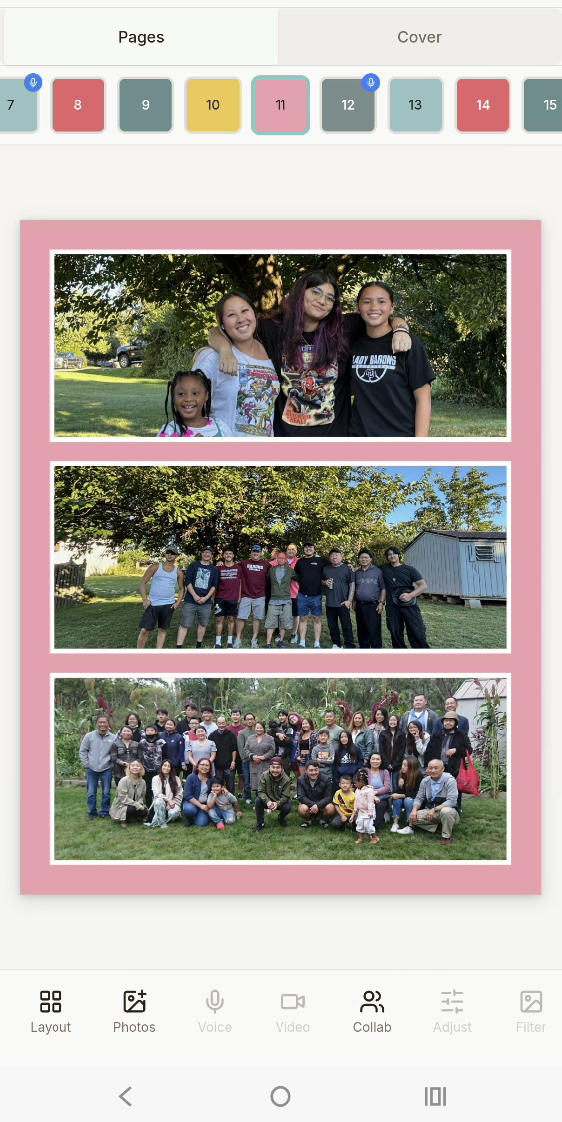
2. The book page preview takes ~70% of the screen. Toolbars and chrome are compressed to thin strips top and bottom. The screen is designed so whatever you're editing — the photos — is always the largest thing you see.

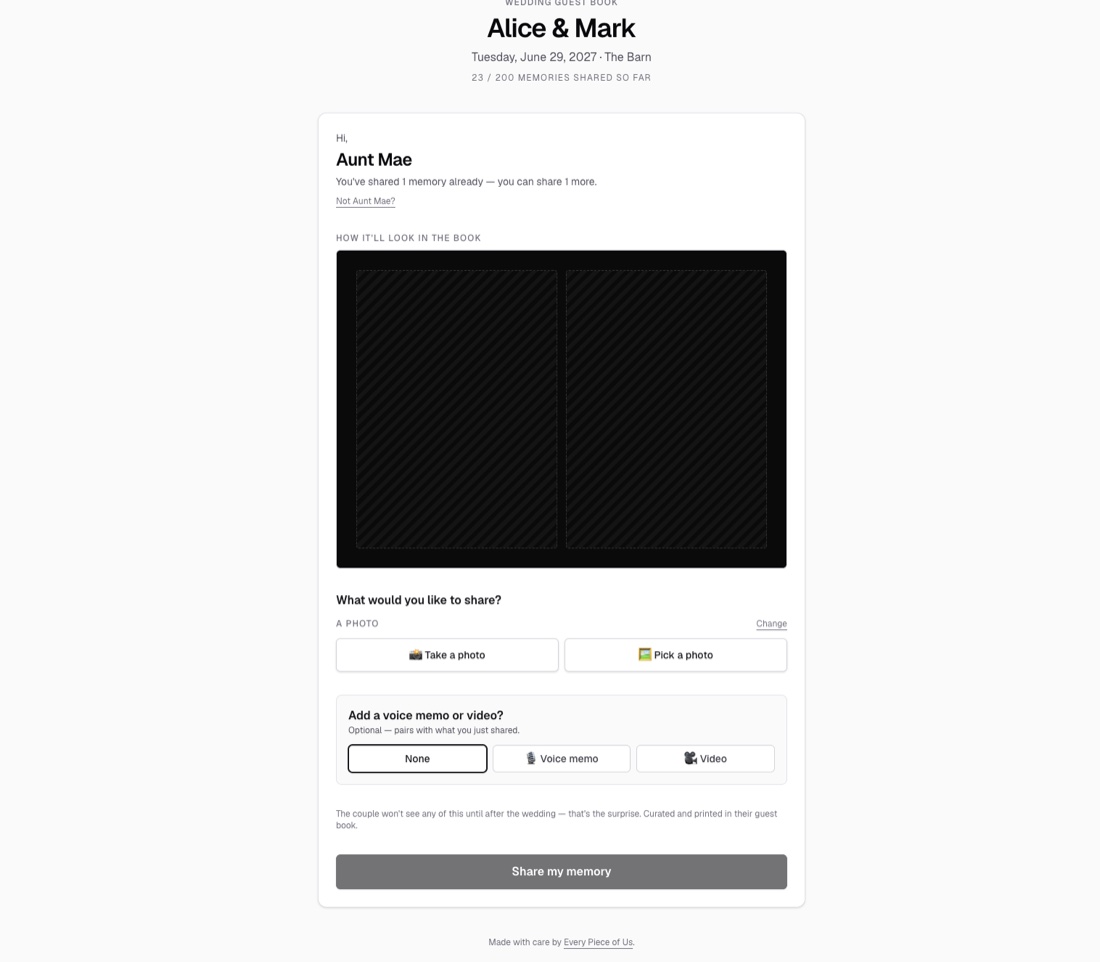
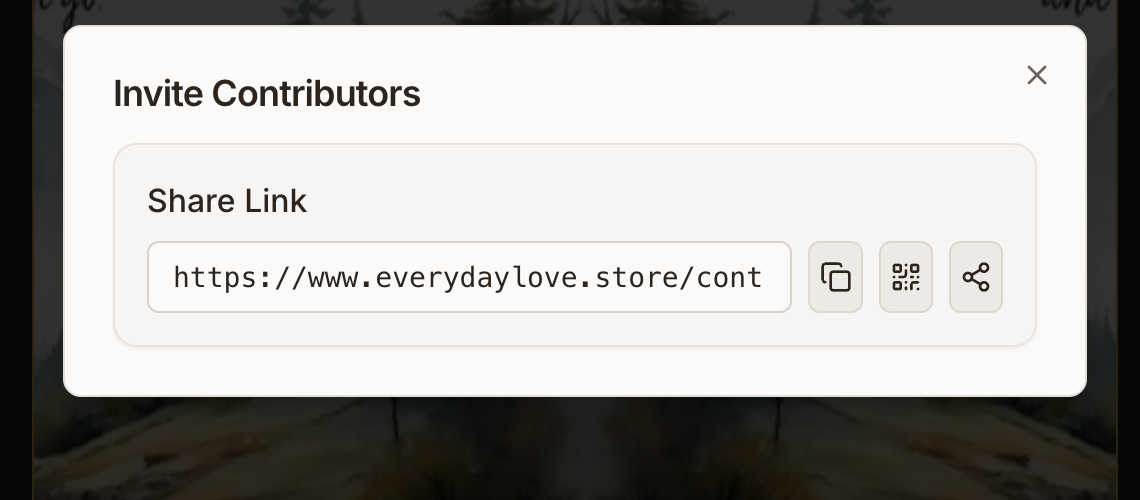
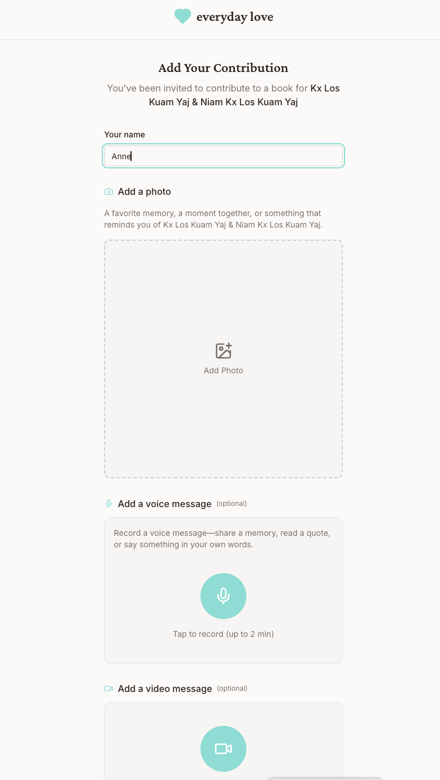
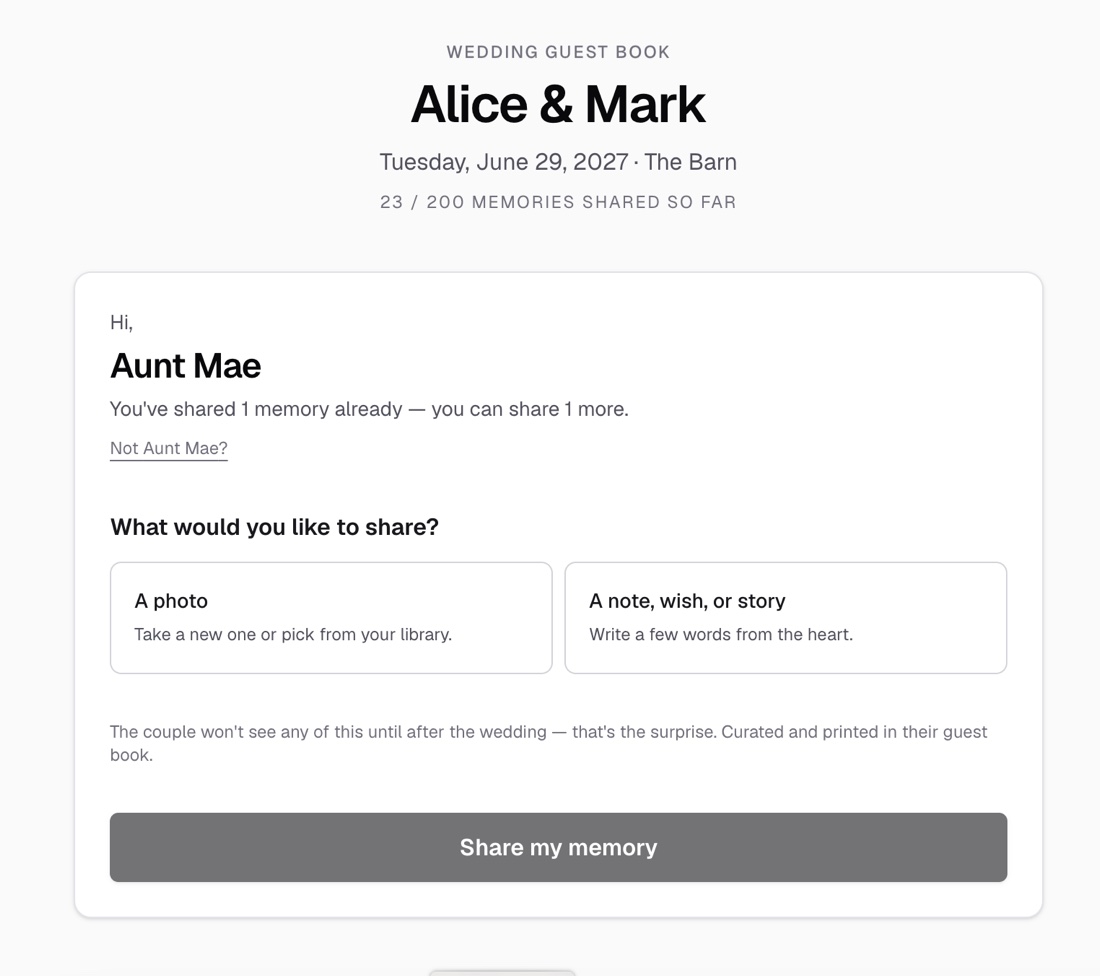
3. I added a contribution link anyone can open — no account required. The obvious path was a full auth flow per contributor, but most of the people we needed (grandparents, distant family) wouldn't make an account just to send a photo. Removing the signup wall meant more contributors per book, at the cost of harder moderation later.

Early Figma wireframe
Final Figma mockup
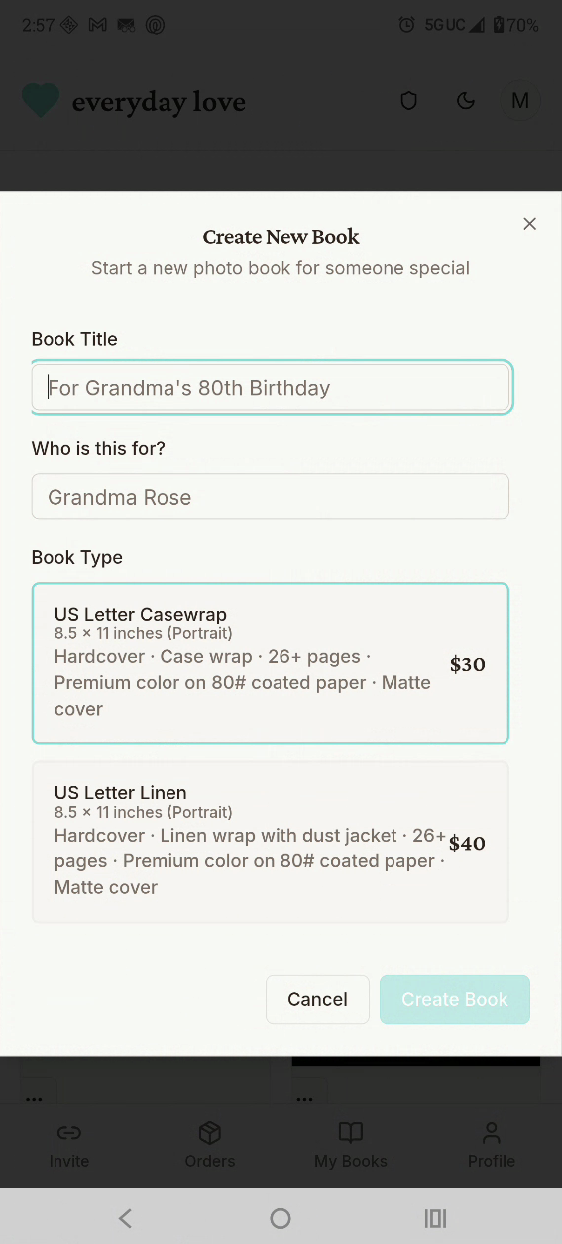
Create New Book flow
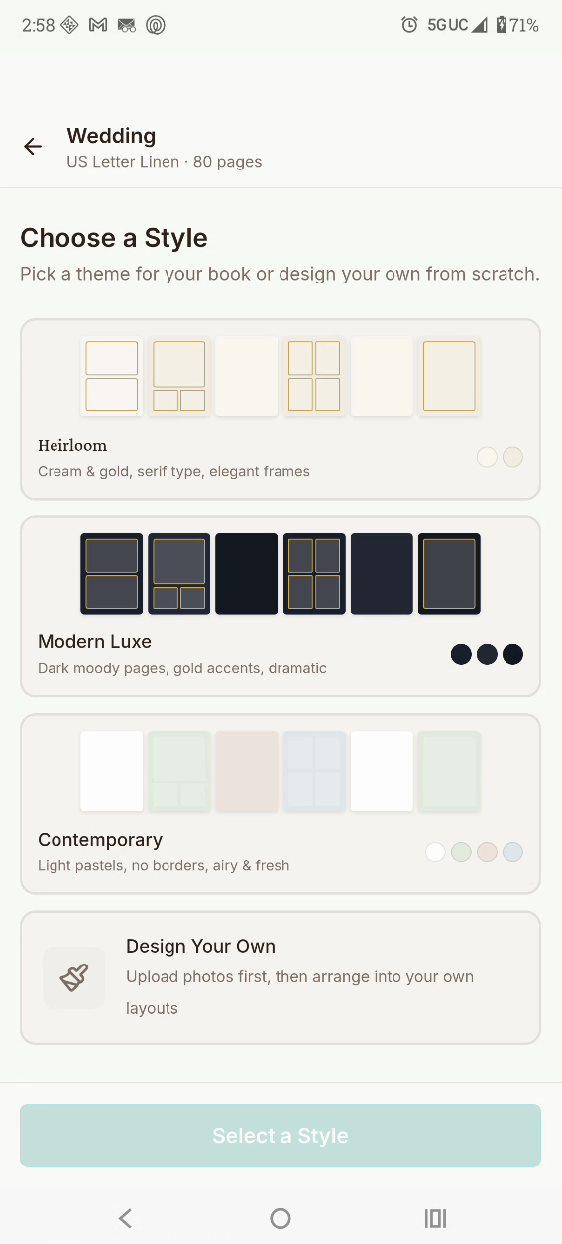
Choose a Style — theme picker
Page editor with layout and photo controls

What I'd Do Differently

I'd spend more time understanding the technical architecture behind the app—especially around native photo pickers and building layouts that accurately translate to the final printed/PDF output.

Next Project

Koinonia →

Back to work

Koinonia

Web Platform — 2023–Present

koinonia.live
FigmaInformation Architecture User FlowsLive Video Google Maps APIStripe PayPal
Koinonia discover page — map-first gathering search

The Problem

Transparency online has been drowned out — but the hunger for it hasn't gone anywhere. Review platforms like Google and Yelp are flooded with paid fake-review farms, AI-generated content, commercialized or sponsored content disguised as reviews, and review-management services that let businesses curate or suppress their public profiles. At the same time, small businesses juggle 5-7 separate tools just to stay visible.

Currently in closed beta — some details held back until public launch.

Market Context

Two things surprised me.

SMB software market worth $100B+ annually (industry reports)

Google removes 170M+ fake reviews per year (Google Transparency Report)

What I Designed and Why

1. In-app messaging between businesses and customers. The obvious alternative was email forwarding — send the customer's message to the business's inbox and let them reply. But email fragments the conversation across inboxes, the platform loses visibility, and the business ends up managing yet another channel. Keeping the thread in-app means the business owns the conversation and customers don't have to leave to follow up.

2. Discovery built on the Google Maps API. The most complete and up-to-date business data available. Launching with real coverage mattered more than building a proprietary database from scratch.

3. QR codes for profile sharing. So a business can share their profile in physical spaces — storefront, receipt, flyer — without a customer needing to type a URL.

Koinonia discover page

Back to Home

Home →

Back to Home

About

About Me

I'm Maliaj. I live in Etters, PA, and I design and build products end to end.

My path wasn't traditional. I worked in compliance, then spent years as a pastor—both roles centered on listening closely to people and understanding what they needed in very different contexts.

By nature, I'm a problem-solver and curious. When I realized building products was actually within reach, I decided to act on it. I took a UX design course and a coding bootcamp, then kept learning on my own so I could bring those ideas to life.

I picked up Figma, HTML, CSS, React, and Bootstrap, then learned enough backend and tooling (Firebase, Stripe, Capacitor, print APIs) to ship apps like 'everyday love' to the Apple App Store and Google Play.

I'm looking to grow through more hands-on product work and keep building real products with strong teams.

How I work

I start with the problem, not the tool. I spend most of my early time on understanding people, not screens. Being able to explain the problem clearly in two sentences to someone outside of design should never be underrated. I focus on solutions that are practical, efficient, and work in the real world.

I move quickly between Figma and code. I'll prototype in Figma, but the moment interaction becomes important, I build it. Real behavior only shows up in real code. Static prototypes can hide how something actually feels.

I'm comfortable working across design, engineering, and product thinking because that's how I've had to build so far. I prefer working with strong teams and learning from them, but most of my experience has been solo. That's pushed me to learn whatever I need to ship and keep improving.

What I'm looking for

I'm primarily focused on product design, but I also build and want to keep improving both.

I'm looking for a role where I can apply what I know while continuing to learn.

Open to different types of products—not just consumer.

Get in touch

y.maliaj@gmail.com
LinkedIn
717-343-2867